A $6,200 balance sitting at 24% interest doesn’t just feel bad — it actively grows while you sleep How to Negotiate Credit Card Debt Settlement. If you’ve ever stared at a credit card statement and thought “there’s no way I’m paying this off the normal way,” you’re not alone, and you’re not stuck. Learning how to negotiate credit card debt settlement is one of the few debt strategies where a single phone call can genuinely save you thousands of dollars.
This isn’t about tricks or loopholes. It’s about understanding how credit card companies actually think about risk, and using that to your advantage.
What Debt Settlement Actually Means
Debt settlement is when you offer a creditor a lump sum that’s less than what you owe, and they agree to consider the account resolved. Card issuers don’t do this out of kindness — they do it because collecting 50 cents on the dollar today beats gambling on collecting 100 cents on the dollar (or nothing) years from now.
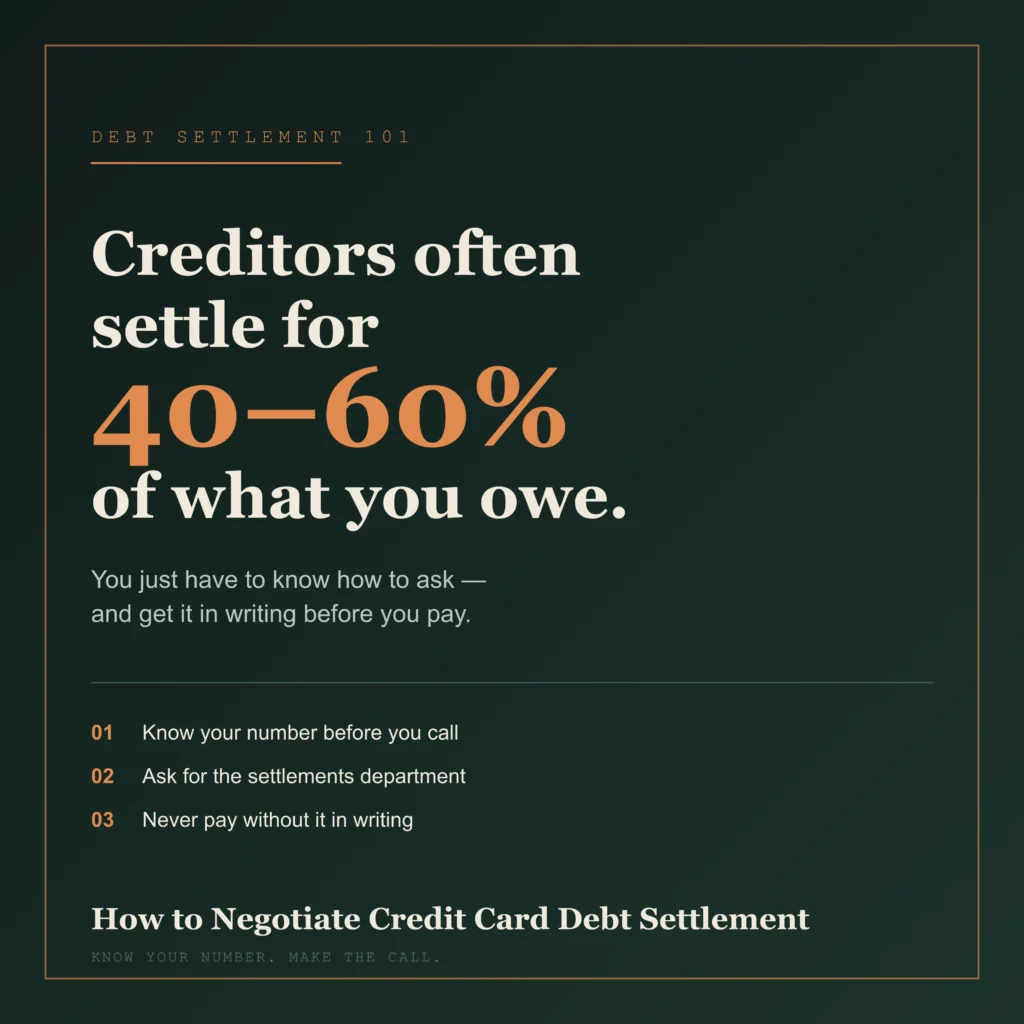
A lot of people assume creditors will laugh at a low offer, but here’s what actually happens: once an account is charged off or several months delinquent, creditors often expect to settle for somewhere between 40% and 60% of the balance. Knowing that range changes how you negotiate from the very first sentence.
When You’re a Good Candidate for Settlement
Debt settlement makes the most sense in specific situations, not as a default first move.
- You’re already behind on payments, not just stressed about them
- You have a lump sum available (savings, a bonus, sale of an asset) to offer
- The account has been charged off or sent to a collection agency
- You genuinely cannot pay the debt in full within a reasonable timeframe
If you’re current on payments and just want a lower interest rate, that’s a different conversation — a hardship or interest-rate-reduction call, not a settlement negotiation.
How to Negotiate Credit Card Debt Settlement: Step by Step
Here’s where the actual work happens. Negotiating isn’t about being aggressive; it’s about being prepared and calm.
1. Know Your Numbers Before You Call
Figure out the maximum lump sum you could realistically pay, and don’t lead with it. Start lower — many people open around 25-30% of the balance and expect to land somewhere in the middle.
2. Call the Right Department
Ask specifically for the “settlements” or “loss mitigation” department. Frontline customer service reps usually don’t have authority to accept a reduced payoff.
3. Explain Your Situation Briefly
You don’t need a sob story. A short, factual explanation works better: reduced income, a medical bill, a job loss. Keep it to two or three sentences.
4. Make Your Offer and Let Silence Do Its Job
State your number and stop talking. This feels uncomfortable, but resisting the urge to fill silence is one of the most underrated negotiation tactics in this process.
5. Get Everything in Writing Before You Pay
This is non-negotiable. Never send money based on a verbal agreement. Ask for a settlement letter confirming the reduced amount and stating the account will be reported as “settled” or “paid as agreed” once payment clears.
The Pushback Most Articles Won’t Give You
Common advice says to always negotiate in installments if you can’t pay a lump sum. In practice, that’s often worse for you. Creditors tend to give their best discounts for a single lump-sum payment, because it closes their risk immediately. Payment plans usually settle for a smaller discount, and if you miss even one payment, the original terms can snap back into place. If you can scrape together a lump sum — even a smaller one — it’s usually the stronger card to play.
What Happens to Your Credit After Settlement
Settling an account will show up on your credit report, typically as “settled for less than full balance,” and it does ding your score. But the damage is usually less severe, and shorter-lived, than most people expect — especially compared to letting an account stay delinquent for years or heading toward bankruptcy.
A few things worth planning for:
- Your score may drop initially, particularly if the account was current before settlement
- The settled account stays on your report for up to seven years, but its negative impact fades over time
- You may owe taxes on forgiven debt over $600, since the IRS can treat it as income
If you’re also tackling debt on multiple cards, having a solid monthly budget in place makes the whole settlement process far less chaotic — it’s much easier to negotiate from a position where you know exactly what you can afford to offer.
A Quick Note on Debt Settlement Companies
You don’t need to hire a company to do this for you. Many settlement companies charge 15-25% of the enrolled debt in fees, and some encourage you to stop paying creditors entirely while funds build up — which tanks your credit faster and isn’t something everyone can afford to risk. Negotiating directly is free, and most people are capable of doing it with a little preparation.
This article is for informational purposes only and does not constitute financial, investment, or legal advice. Individual situations vary, and it’s worth understanding your specific creditor’s policies before committing to any settlement offer.
Take the Next Step
If you’re carrying a balance you know you can’t pay off the standard way, don’t wait for it to hit collections on its own terms — pick up the phone, know your number, and negotiate from a position of preparation rather than panic.
Read This
How to Pay Off $10000 Credit Card Debt Fast
FAQS
How much less will credit card companies settle for?
Most settlements land between 40% and 60% of the total balance, though accounts that are further delinquent sometimes settle lower.
Will negotiating debt settlement hurt my credit score?
Yes, it typically causes a drop, but the impact is usually smaller and shorter-lived than an account that stays unpaid or goes to collections long-term.
Can I negotiate credit card debt settlement myself without a company?
Yes. Calling the settlements department directly, making a reasonable lump-sum offer, and getting the agreement in writing is something most people can do without paying a third party.