You check your credit score, see something in the 550s, and then a debt consolidation ad promises you’ll be “debt-free in months How to Consolidate Debt With Bad Credit.” Sound familiar? Here’s the thing nobody tells you upfront: most of those flashy consolidation loan ads are built for people with good credit, not the people who actually need help the most.
If you’re wondering how to consolidate debt with bad credit, you’re not out of options — you just need to know which ones are actually built for your situation instead of a version of you with a 720 score.
This guide walks through what really works, what to skip, and how to avoid turning one debt problem into two.
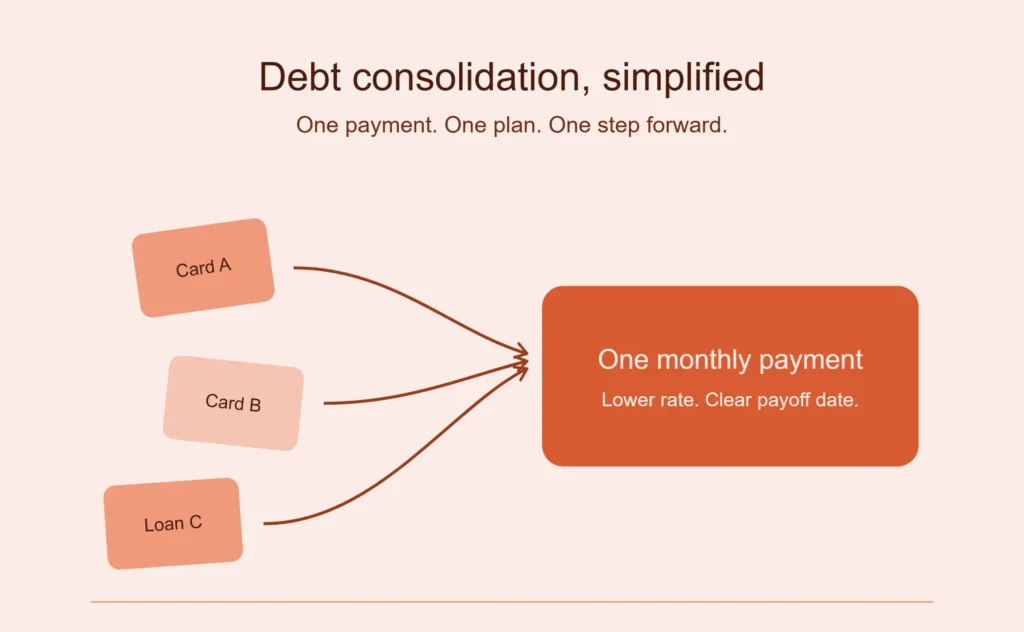
What “Consolidating Debt With Bad Credit” Actually Means
Debt consolidation means combining multiple debts — credit cards, medical bills, personal loans — into a single monthly payment, ideally at a lower interest rate. The problem is that traditional consolidation loans are priced based on risk, and lenders see a low credit score as high risk. That’s why a lot of people with damaged credit get approved for loans with 25-30% APR, which barely beats the credit cards they’re trying to escape.
So learning how to consolidate debt with bad credit isn’t about finding a magic loan. It’s about picking the right tool for where your credit actually stands right now, not where you wish it was.
Common Advice That Doesn’t Always Hold Up
Most articles will tell you to “just improve your credit score first, then consolidate.” That’s fine in theory, but if you’re staring down three overdue credit cards and a collections call every week, waiting six to twelve months to build credit isn’t realistic advice — it’s a delay tactic dressed up as strategy.
Sometimes the better move is acting now with an imperfect tool (like a nonprofit debt management plan) rather than waiting for a perfect loan offer that may never come.
Real Ways to Consolidate Debt With Bad Credit
Here are the options that are actually designed for — or at least accessible to — people with lower credit scores.
1. Nonprofit Debt Management Plans (DMPs)
A nonprofit credit counseling agency can negotiate lower interest rates with your creditors and roll your debts into one monthly payment to the agency, which then pays your creditors. Credit score requirements are minimal because approval is based on income and debt load, not your score.
A typical DMP runs 3-5 years and can knock interest rates down from the 20s into the single digits. That’s a real difference — on $8,000 of credit card debt, that can mean paying off the balance years faster and saving over a thousand dollars in interest.
2. Secured Debt Consolidation Loans
If you own a car or have some form of collateral, a secured loan can get you approved even with bad credit, because the lender has less risk. Interest rates are usually much lower than unsecured bad-credit loans.
The catch: if you can’t make payments, you risk losing the asset. This option only makes sense if your budget can realistically support the new payment.
3. Credit Union Personal Loans
Credit unions are often more flexible than big banks when it comes to approving loans for people with bad credit, especially if you’re already a member. Interest rate caps at federal credit unions are also regulated, so you won’t get hit with the sky-high APRs some online lenders charge.
4. Home Equity Options (If You Own a Home)
A home equity loan or HELOC uses your house as collateral, which usually means lower rates regardless of credit score. This is a bigger commitment and not something to jump into casually — but for larger debt loads, it can genuinely change the math.
5. Balance Transfer Cards (Limited Use Case)
These typically require decent credit, so they’re not usually available with bad credit. Worth mentioning only because some people qualify for lower-limit versions, and it’s better to rule this out early than assume it’s your main path.
How to Decide Which Option Fits Your Situation
Before picking a method, ask yourself a few honest questions:
- How much total debt am I trying to consolidate?
- Do I have any collateral, like a car or home?
- Can my current budget handle a new fixed payment?
- Is my main problem interest rates, or is it that I’m not tracking spending at all?
If that last question hits home, it’s worth mentioning that pairing consolidation with a solid monthly budget — especially if your income isn’t steady — makes the whole plan more sustainable. Learning how to make a monthly budget with irregular income is often the missing piece that keeps people from ending up back in debt six months after consolidating.
Steps to Consolidate Debt With Bad Credit the Right Way
- Pull your full debt list — balances, interest rates, minimum payments — so you know exactly what you’re working with.
- Get your credit report (not just your score) to see what a lender will actually see.
- Compare at least two nonprofit credit counseling agencies before committing to a DMP.
- If considering a secured loan, calculate the real monthly payment against your current budget, not your hoped-for budget.
- Avoid any company that guarantees approval before checking your information — that’s a red flag, not a shortcut.
Mistakes to Avoid When You Have Bad Credit
- Signing up for a “debt relief” company that charges upfront fees before doing anything (illegal in most states for a reason).
- Taking a high-APR consolidation loan just to combine payments, without checking if the new rate is actually lower than what you’re paying now.
- Consolidating debt without changing the spending habits that created it in the first place.
This article is for informational purposes only and does not constitute financial, investment, or legal advice, so it’s worth talking to a nonprofit credit counselor about your specific numbers before signing anything.
Read This
Debt Free Journey Timeline for Beginners: What to Expect
FAQS
Can I consolidate debt if my credit score is under 550?
Yes, though your options shrink to things like nonprofit debt management plans or secured loans, since most unsecured consolidation loans require higher scores.
Will consolidating debt with bad credit hurt my score further?
It depends on the method — a DMP typically doesn’t hurt your score much, but a new loan may cause a temporary dip from the credit inquiry before your score recovers as balances drop.
Is debt consolidation the same as debt settlement?
No. Consolidation combines debts into one payment without reducing what you owe, while settlement negotiates to pay less than the full balance, often at a steeper cost to your credit.